BRIESex Fantasia II · steel double-ender designed by Max Oertz, 1928

Ninety-eight years on Dutch waters, nine owners, one lawyer who did not come back from Natzweiler — and a lines plan drawn by hand because the designer’s own has never been found.

Lines plan of Bries: sheer plan, half-breadth plan and body plan, hand drawn in pencil
DrawingLines plan, taken off the hull
DesignMax Oertz, 1928
Buildernot yet identified
OERTZ ORIGINALS WANTED
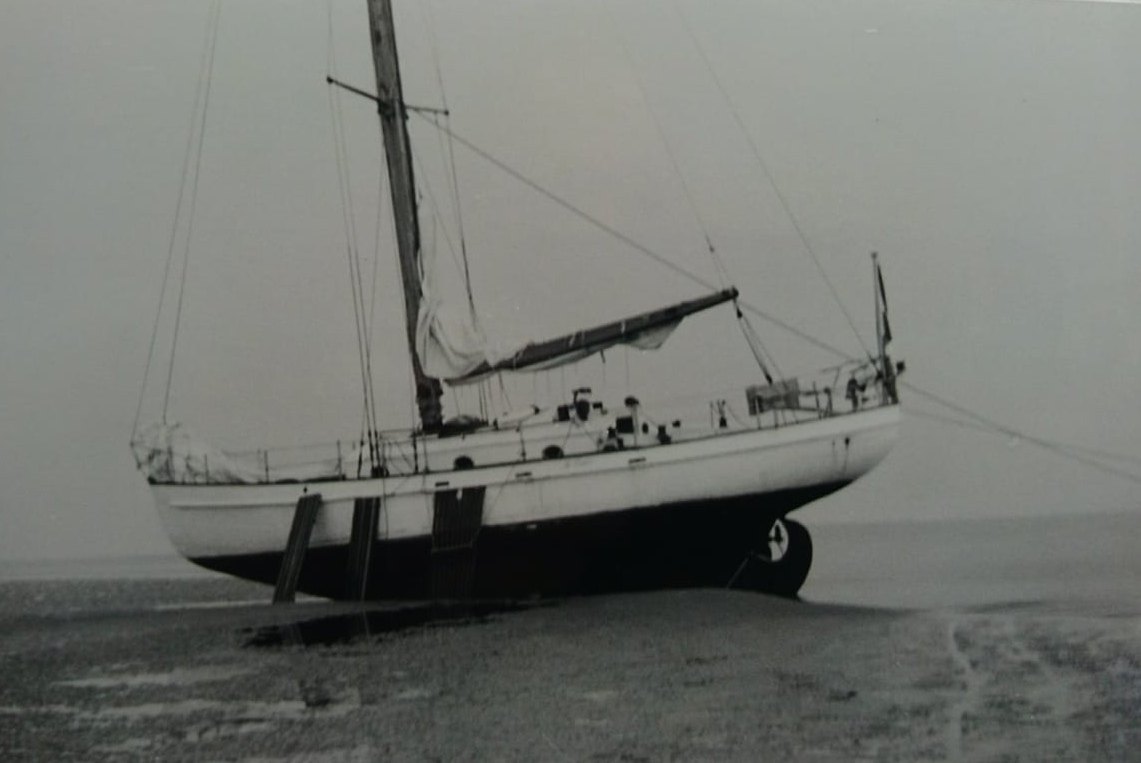
Bries dried out on beaching legs on a tidal flat, sails furled
Dried out on her legs. Date unknown.
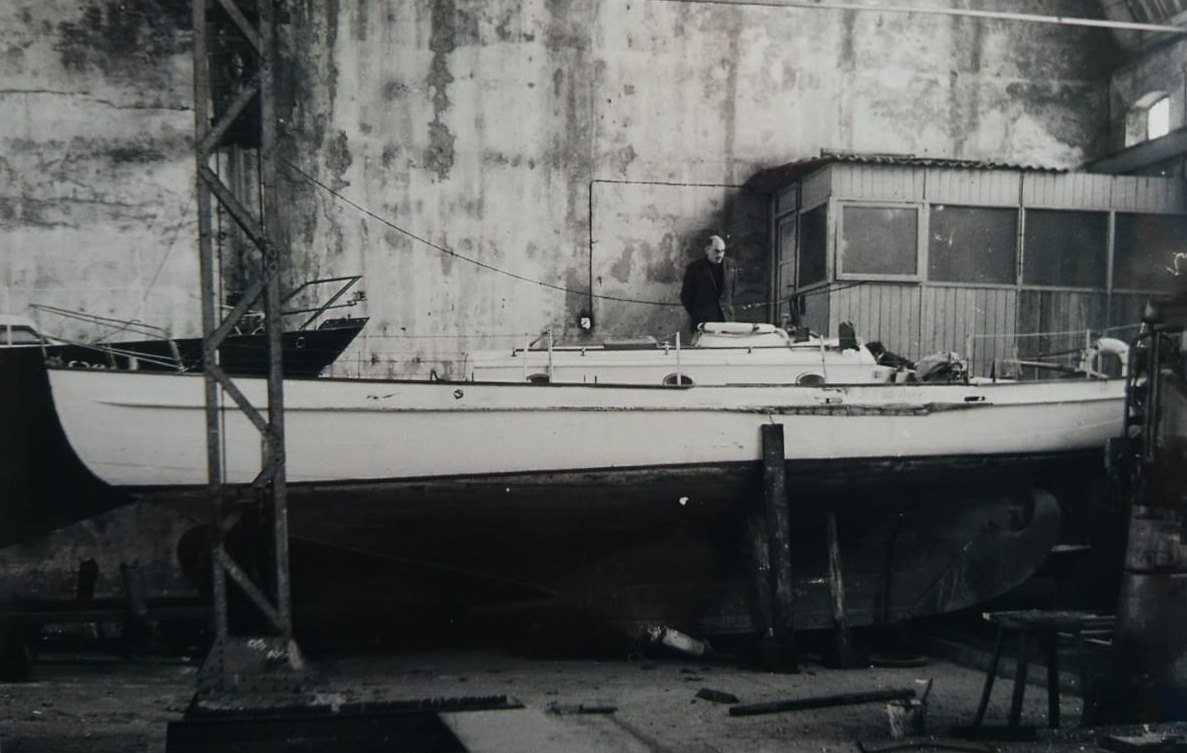
Bries on the hard inside a shed, a man standing beside the deckhouse
In the shed. Date unknown.
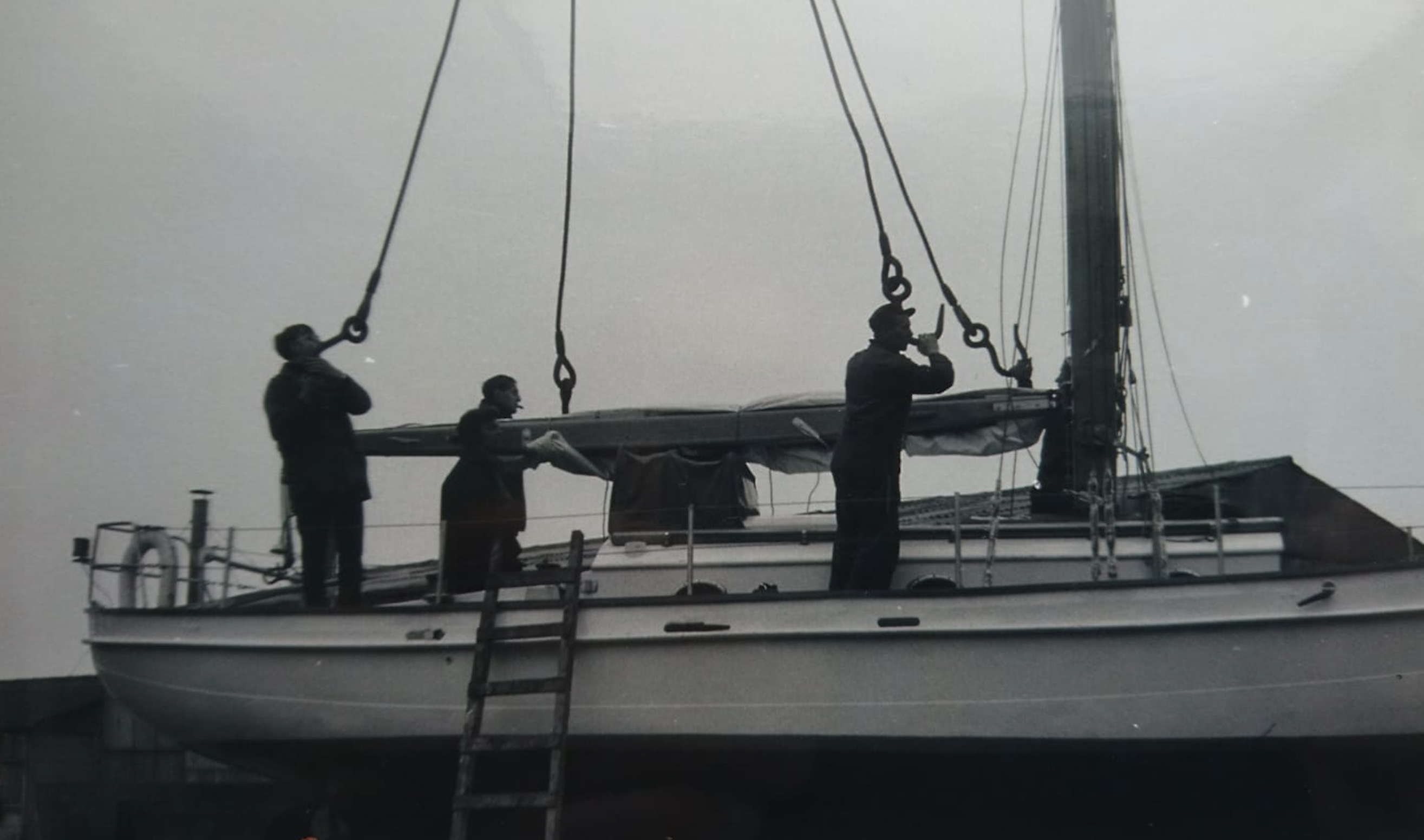
Bries in crane slings with three men on deck
Craned out. Date unknown.
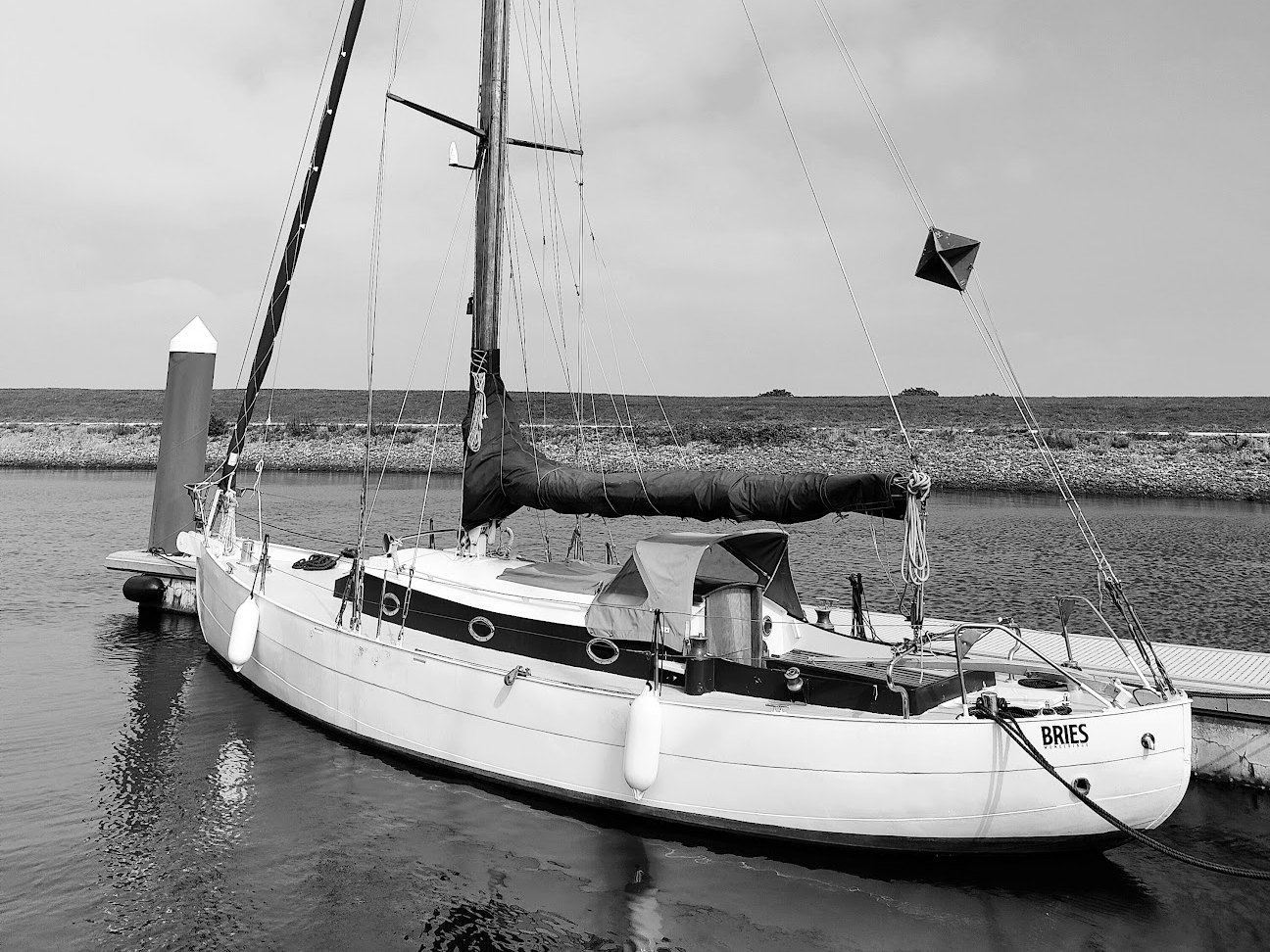
Bries moored at a pontoon on the Oosterschelde, 2021
Oosterschelde, September 2021.

History

Bries is a steel double-ender designed in 1928 by the Hamburg naval architect Max Oertz (1871–1929), in the last year of his life. Oertz classed her as a Küstenjollenkreuzer, a coastal cruiser with a slender V-shaped forebody that flattens out aft into the light-displacement lines that were unusual then and are ordinary now. The Oertz ship register lists her under her original name, Fantasia II, with a Dutch first owner: Otto Verdoorn of Rotterdam. By 1928 Oertz no longer ran his own yard and worked from a design office, so the hull was built elsewhere — where, is still unknown.

Verdoorn, a young Rotterdam lawyer, kept her until his arrest in 1942 and death in the Natzweiler camp in 1944. After the war P.J. Soetens bought the boat from Verdoorn's heirs. She had been flooded inside and the mahogany panelling was gone; Soetens spent two years rebuilding her. Somewhere between 1945 and 1950 she became Bries — when, and by whom, is another open question.

In 1950 J.B. Olifiers bought her and painted the deckhouse white. In 1951 he took her to the Skagerrak, where a lightning strike in a severe storm knocked out compass and navigation; a Swedish fishing boat eventually came to their aid. In 1960 Bries sailed the North Sea Race and finished 8th of 32 starters.

Bries during the 1960 North Sea Race
North Sea Race, 1960.
Bries during the 1960 North Sea Race
North Sea Race, 1960.

In 1961 she was advertised for sale at 19,000 guilders. J. Vlaming bought her in 1963 for 15,000 and put the deckhouse back to its original colour. She has stayed in Dutch hands since. By the early 2000s she was destined for the scrapyard; G. Fongers saved her, rebuilt and reinforced the hull, gave her a new stainless-steel deckhouse and sailed her back to Scandinavia. Since 2021 she has sailed from the Oosterschelde, now under electric power: the diesel engine came out in favour of an electric motor, and the saloon got its space back.

1961 magazine advertisement offering Bries for sale
For sale, 1961.

The boat

Original nameFantasia II (also recorded as Phantasia II)
DesignerMax Oertz, Hamburg
Design year1928
TypeKüstenjollenkreuzer, steel double-ender
Length overall10.30 m
Waterline9.53 m
Beam2.75 m
Draught1.75 m
Sail area48 m²
Buildernot yet identified
Yard numberunknown
First ownerMr. Otto Verdoorn, Rotterdam
Home portOosterschelde, Netherlands

What the register says

The Max Oertz Schiffsregister, kept by the designer's descendants, holds one line for her: Bries · Fantasia 2 · 1928 · 10,3 · 9,53 · 48 · Küstenjollenkreuzer · Otto Verdoorn. The waterline length and sail area do not come from any later owner, so somewhere a period document exists — a drawing, a yacht list, a magazine table — from which those numbers were taken. Finding it is the point of this page.

What the hull says

The overall length, beam and draught above are measured on the boat and match the register. Her lines exist only as the hand-drawn set shown below, taken off the hull; Oertz’s own drawings and the sail plan have not been seen.

Drawings

These are the only drawings of Bries known to exist: a lines plan taken off the hull in pencil, on station grid, with the sheer plan, half-breadth plan and body plan on one sheet, and the profile and body plan repeated at larger scale. Their author and date are not recorded. They are not the 1928 Oertz drawings, but they preserve her shape exactly, and they are the reference for anyone who wants to compare her with other Oertz designs. Click a drawing for the full-resolution file.

Lines plan: sheer plan above, half-breadth plan below, body plan at left
Lines plan — sheer plan, half-breadth plan and body plan, bow to the left as drawn. Pencil on paper, author and date unknown.
Profile of the hull with waterlines and station lines, bow to the right
Sheer plan at larger scale, bow to the right, showing the deep aft sections and the fine forefoot of the Küstenjollenkreuzer type.
Body plan: transverse sections
Body plan. Forward sections on the right of the centreline, aft sections on the left; the deep keel is the narrow lobe below.

Do you recognise the hand?

If you know who made these drawings, or hold another copy, a different sheet, or the sail plan, please get in touch. A lofting sheet like this was often drawn at a yard before a refit; the 1945–47 rebuild by Soetens is one candidate.

Owners

  1. 1928 – 1944, estate until 1945 · as Fantasia II
    Mr. Otto Verdoorn

    Born in Rotterdam on 18 May 1904; pupil of the Erasmiaans Gymnasium; advocaat en procureur in Rotterdam, living at Nieuwe Binnenweg 149. A member of the resistance, he was arrested by the Sicherheitspolizei on 19 November 1942, held at the Noordsingel prison, and moved on 22 December 1942 to the SD prison at Haaren. He reached Natzweiler-Struthof on 27 October 1943 as prisoner 5682 and died there on 6 or 7 June 1944 — "illness and/or exhaustion" in the records. He was 40.

    Newspaper portrait of Otto Verdoorn, in profile
    Otto Verdoorn. Newspaper photograph, via Delpher.
  2. 1945 – 1950
    P.J. Soetens

    Bought her from Verdoorn's heirs, flooded and stripped; rebuilt her over two years. Probably the owner who renamed her Bries.

  3. 1950 – 1963
    J.B. Olifiers

    Skagerrak 1951; North Sea Race 1960, 8th of 32.

    Bries in the Olifiers years
  4. 1963 – 1976
    J. Vlaming
    Bries in the Vlaming years
  5. 1976 – 1994
    M. Brautigam

    No photographs or stories from these years yet.

  6. 1994 – 2005
    A. van de Nadort

    No photographs or stories from these years yet.

  7. 2005 – 2021
    G. Fongers

    Rescued her from the scrapyard and brought her back to life: restored and reinforced the steel hull and built a new deckhouse in stainless steel. Then took her to Scandinavia again, decades after Olifiers had last sailed her there.

    Bries in the Fongers years
  8. 2021 – present
    S. Coelho

    Removed the heavy diesel engine and converted her to electric propulsion: a TEMA Marine electric propulsion system, designed in Croatia, matching the power of the diesel it replaced, fed by two 48 V 200 Ah battery banks (about 19 kWh). The space the engine took in the saloon is hers again. Researching her history and searching for the original drawings.

    Bries today

Can you help?

Everything above comes from later owners, from war archives and from one set of hand-drawn lines. Nothing from the year she was built has surfaced yet. We are looking for:

Send a message to @bries1928 on Instagram. Dutch, English, German or Portuguese — all welcome.

Sources

  1. Max Oertz Schiffsregister — entry "Bries / Fantasia 2, 1928, Küstenjollenkreuzer, Otto Verdoorn".
  2. Netwerk Oorlogsbronnen — timeline of Otto Verdoorn, 1904–1944.
  3. Stadsarchief Rotterdam — Huis van Bewaring registration card, 19 November 1942.
  4. Documentatiegroep 40-45 — war-victims database, record 19632.
  5. United States Holocaust Memorial Museum — Natzweiler-Struthof prisoner records, no. 5682.
  6. Delpher — Dutch newspaper archive: portrait of Otto Verdoorn; Creditreform advertisements, 1932–1939.
  7. Accounts and photographs from owners, 1945–2021, collected by the current owner.